About this tool
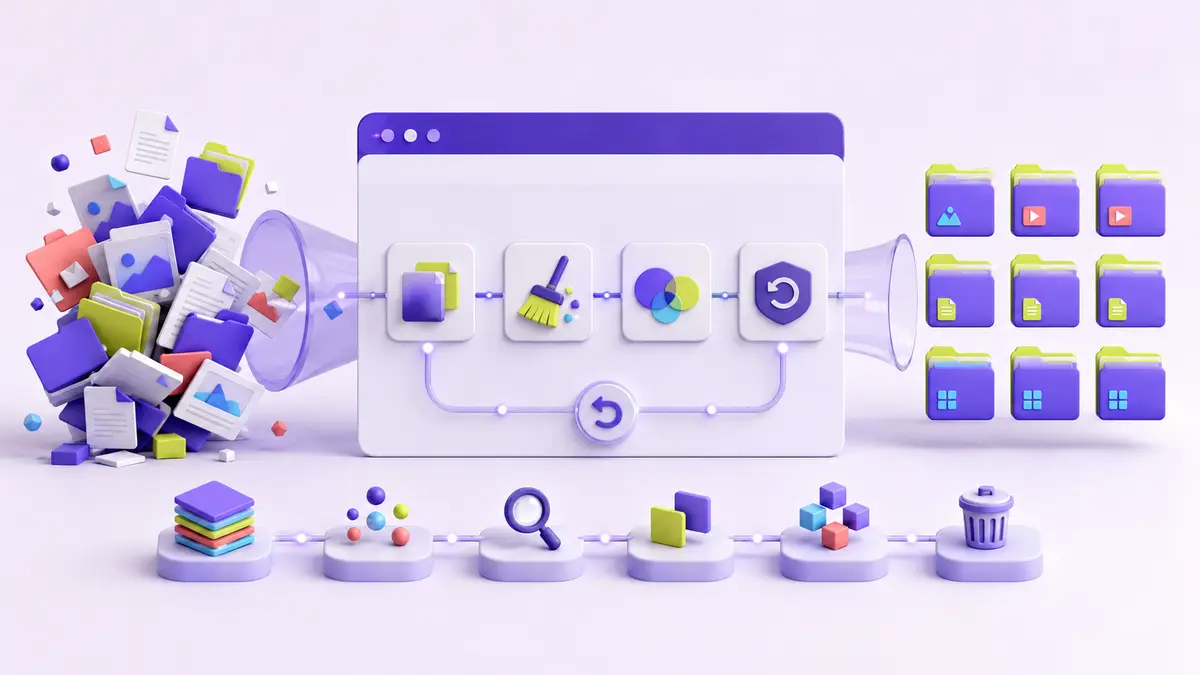
Natural Sort Lines is designed for one clear job: Natural Sort Lines runs entirely in your browser. Files are never uploaded to our server. The operation runs in the browser, so you can prepare and inspect the result without sending the file to a conversion server.
Format details
TEXT
TEXT is part of this workflow. Its practical value depends on compatibility, file size, fidelity, editability, and the application that will open the result.
- Quality
- 3/5
- Transparency
- —
- Editing
- Codec/format dependent
- Web use
- 3/5
- Compatibility
- 3/5
When to use it
- Business: Prepare a compatible delivery copy for customers, partners, or an internal system.
- Education: Submit coursework in the required format while retaining the editable master.
- Personal: Make a file easier to open, share, store, print, or publish.
- Professional: Standardize an asset before review, archiving, automation, or production.
How to use the tool
- Open Natural Sort Lines in a current browser.
- Choose a copy of the source file or enter the requested text.
- Review the available options and start with balanced settings.
- Run the operation and wait for the local preview or result.
- Inspect the most important pages, pixels, fields, tracks, or values.
- Download the result with a clear file name and keep the original.
Best practices
- Keep the original until you verify the result.
- Use the best available source instead of converting an already degraded copy.
- Change one important setting at a time so the effect is easy to compare.
- Test the result in the application and device used by the recipient.
- Check dimensions, page order, transparency, timing, links, and metadata when relevant.
- Use a descriptive output name that records the operation or version.
Common mistakes
- Replacing the only copy of an important source.
- Assuming a renamed extension is the same as a real conversion.
- Choosing maximum compression or an extreme setting before testing.
- Ignoring unsupported features such as layers, fonts, transparency, forms, or embedded tracks.
- Downloading the result without opening it.
- Sharing a sensitive file without checking its name and metadata.
Frequently asked questions
Does Natural Sort Lines upload my file?+
No. Supported file processing runs in your browser. Normal page requests and anonymous measurements may still be recorded.
Do I need to install software for Natural Sort Lines?+
No. Use a current browser with enough free memory for the size and complexity of the file.
What files work best with Natural Sort Lines?+
Use a valid, undamaged source. Password protection, unusual codecs, or unsupported embedded features can prevent processing.
Will Natural Sort Lines preserve the original quality?+
The source remains unchanged. Output quality depends on the operation, chosen settings, and limits of the result format.
Can I use Natural Sort Lines on a phone?+
Yes, when the mobile browser supports the required file APIs and has enough memory. Large media is usually easier on a desktop device.
Why can a large file take longer?+
Browser processing uses the device processor and memory. Resolution, duration, page count, compression, and other open tabs all affect time.
How should I verify the Natural Sort Lines result?+
Open the download in a second viewer and check the content that matters most: pages, dimensions, text, transparency, timing, links, or data.
Does Natural Sort Lines recover information already lost?+
No. Conversion cannot recreate missing pixels, fonts, layers, metadata, audio detail, or document structure that is absent from the source.
Is Natural Sort Lines suitable for confidential files?+
Local processing reduces exposure, but you should still use a trusted device, review metadata and file names, and follow your organization’s policy.
What should I do if Natural Sort Lines fails?+
Confirm the source opens normally, try a smaller valid file, close memory-heavy tabs, use balanced settings, and keep the original.
Continue your workflow
Natural Sort Lines is most useful when the output has a defined destination and a clear acceptance check. Keep the master file, verify the downloaded result, and then continue with a related tool only when another change is genuinely required.